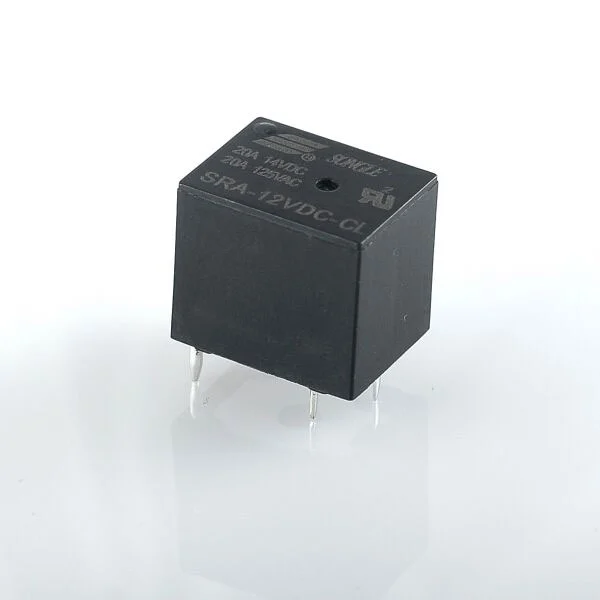
As a brand with decades of commitment to precision engineering, Songle specializes in manufacturing robust automotive relays designed to meet the rigorous demands of the global automotive industry. Our components are engineered for longevity, consistent performance under extreme conditions, and seamless integration into vehicle electrical systems.
In the complex electrical networks of modern vehicles, Automotive Relays serve as the critical, silent workhorses. Fundamentally, a relay is an electrically operated switch. It uses a low-power circuit (like the signal from your headlight switch) to control a high-power circuit (the actual headlight bulbs). This core function makes them indispensable for managing high-current loads safely and efficiently, protecting sensitive control modules and switches from damage. Without reliable automotive relays, features like starting the engine, operating power windows, or engaging the cooling fan would be impractical, placing excessive electrical burden on dashboard controls and wiring.
Songle automotive relays are deployed across virtually every electrical system in a vehicle:
How can I tell if my car's automotive relay has failed?
Common failure symptoms include the component it controls not working at all (e.g., no headlights), intermittent operation, or hearing a rapid clicking sound from the relay location. A failed relay can cause a no-start condition if it's the fuel pump or starter relay. The most reliable diagnostic method is substitution: swap the suspect relay with an identical, known-good relay from another, non-critical circuit in the fuse box. If the problem moves, the relay is faulty.
What is the difference between a mechanical relay and a solid-state relay (SSR) for automotive use?
Mechanical relays, like most Songle standard models, use an electromagnetic coil to physically move metal contacts together. They are cost-effective, handle high inrush currents well (like for motors), but have moving parts subject to wear. Solid-state relays use semiconductor components (like thyristors) to switch with no moving parts. They are faster, silent, and have a longer lifespan for frequent switching, but are generally more expensive, generate heat, and can be more sensitive to voltage spikes. For most standard vehicle load control, robust mechanical relays remain the industry standard.