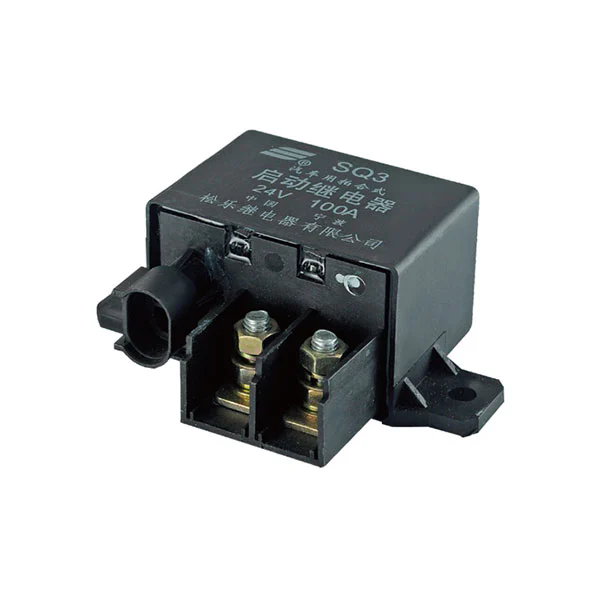
In the complex electrical systems of modern vehicles, reliability is non-negotiable. Plug-in automotive relays serve as the critical switches that control high-current circuits with low-current signals, ensuring the safe and efficient operation of essential components like headlights, fans, fuel pumps, and horns. Songle, with decades of engineering excellence, offers a comprehensive range of robust, high-quality plug-in automotive relays designed to meet and exceed the rigorous demands of the automotive industry, from OEM manufacturing to aftermarket replacements.
Q: Why do some Songle relays have a diode or resistor symbol on the case?
A: This indicates built-in protection circuitry. A diode (often marked with "-1" in the part number) is wired across the coil to suppress the high-voltage spike (back EMF) generated when the coil is de-energized, protecting transistors in modern ECUs. A resistor serves a similar spike-suppression function but allows for bidirectional current flow. Using a relay with the correct suppression is crucial for modern vehicle electronics.
Q: My relay clicks but the device doesn't turn on. What could be wrong?
A: An audible click usually means the coil is energizing. The failure is likely in the high-current (contact) circuit. 1) Check for corrosion or poor connection at the relay socket terminals (especially terminals 30 and 87). 2) The relay contacts may be worn out or burnt, preventing current flow. Test by swapping in a known-good relay. 3) Verify the fuse and wiring for the device (load) itself is intact.
Q: What is the expected lifespan of a Songle automotive relay?
A: Lifespan depends heavily on the switched load. Under rated resistive load (like lights), our relays are tested for 100,000+ mechanical operations and often exceed this. With inductive loads (motors, solenoids) which cause more contact arcing, the electrical life may be lower. Harsh environmental factors like moisture, salt, and extreme heat can also impact longevity. Using a relay with a current rating well above the actual load is the best practice for maximizing service life.
Q: Are Songle relays suitable for non-automotive applications?
A: Absolutely. While designed to automotive-grade standards for vibration and temperature, Songle plug-in relays are widely used in industrial control panels, marine applications, solar power systems, and home automation projects where a reliable, socket-mounted relay is required. Their standardized footprint and robust construction make them highly versatile.
Standard ISO mini relays typically use a 5-pin configuration with the following layout:
Always refer to the diagram printed on the relay housing or the Songle datasheet for the specific pinout. Ensure all connections are tight and use appropriate wire gauges for the current being carried. The control circuit (pins 85/86) can use thinner wire (e.g., 18 AWG), while the load circuit (pins 30/87) must use wire sized for the load's current draw.