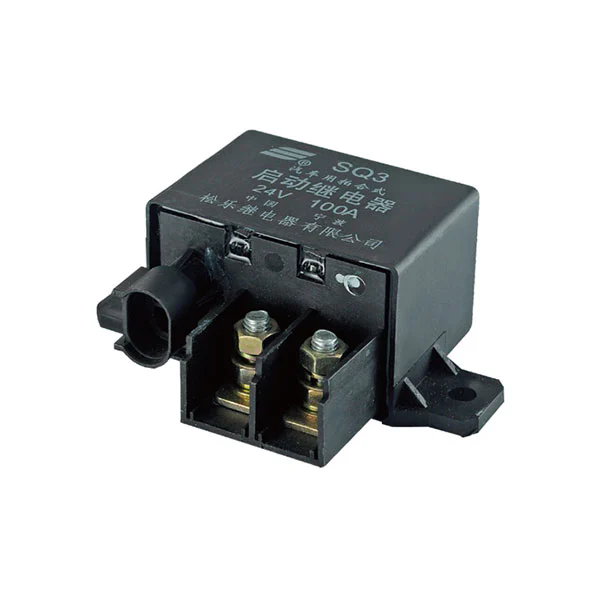
Small high-power relays are critical components in modern electrical systems, combining compact design with the ability to handle high currents reliably. This article provides a comprehensive guide on how these relays function, their key applications, selection criteria, and troubleshooting tips. By understanding their operation and performance characteristics, engineers and technicians can improve system efficiency, safety, and longevity. Ningbo Songle specializes in small high-power relay solutions that balance reliability, size, and high-current capacity for industrial and commercial applications.

A small high-power relay is an electromechanical or solid-state switching device that controls high currents with a low-power control signal. Despite their compact form factor, these relays can manage high voltages and currents, providing electrical isolation, safety, and precise switching capabilities.
These devices are widely used in automotive systems, industrial equipment, home appliances, and renewable energy solutions. Ningbo Songle manufactures small high-power relays engineered for reliable performance under demanding conditions while maintaining space efficiency.
Many engineers and manufacturers face recurring challenges when integrating small high-power relays into their systems:
Addressing these pain points requires careful relay selection, understanding technical specifications, and proper installation practices.
Relays are categorized by their switching mechanism and design. Each type offers specific advantages for different applications.
Selecting the correct small high-power relay requires evaluating electrical, mechanical, and environmental factors:
Ningbo Songle provides technical assistance to help customers choose the appropriate relay type, ensuring both reliability and space efficiency.
Relay performance depends on several key parameters that affect system reliability and safety:
Regular testing and monitoring of these parameters help maintain consistent relay performance across production runs.
| Relay Type | Current Rating | Switching Mechanism | Best Applications |
|---|---|---|---|
| Electromechanical (EMR) | Up to 40A | Mechanical Contacts | Industrial machines, general-purpose switching |
| Solid-State (SSR) | Up to 60A | Electronic Switching | Automation, high-speed switching, low-noise systems |
| Power PCB Relay | Up to 30A | Mechanical Contacts | Compact circuit board applications |
| Automotive Relay | Up to 50A | Mechanical Contacts | Automobile electronics, high-vibration environments |
Small high-power relays are used in a variety of industries and devices:
What is the main advantage of a small high-power relay?
It combines compact size with the ability to switch high currents safely, saving space while maintaining reliability.
Can one relay type handle all loads?
No. Different relays are optimized for resistive, inductive, or capacitive loads. Selection must match the load characteristics.
How can overheating be prevented?
Choose a relay with appropriate current rating, proper heat dissipation, and follow manufacturer installation guidelines.
Are solid-state relays always better than mechanical relays?
Not always. SSRs offer speed and longevity, but EMRs may be more cost-effective for certain high-current, low-frequency applications.
Small high-power relays are indispensable in modern electrical systems, providing precise control and safe operation in a compact form. Understanding relay types, selection criteria, and performance factors enables engineers and manufacturers to optimize their designs and ensure long-term reliability.
Ningbo Songle offers a comprehensive range of small high-power relays tailored for diverse applications. If you want to enhance your system performance, reduce downtime, or receive professional guidance on relay selection, contact us today to discuss your requirements and discover how Ningbo Songle can support your projects.