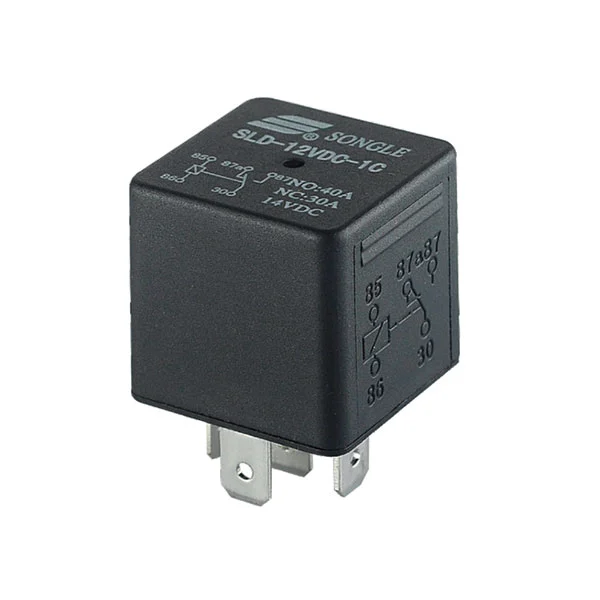
Summary: High current relays are essential components in electrical systems where large currents need to be controlled safely and efficiently. This article explains the working principles, applications, advantages, and considerations for high current relays, helping engineers and customers make informed decisions for industrial, automotive, and renewable energy systems.
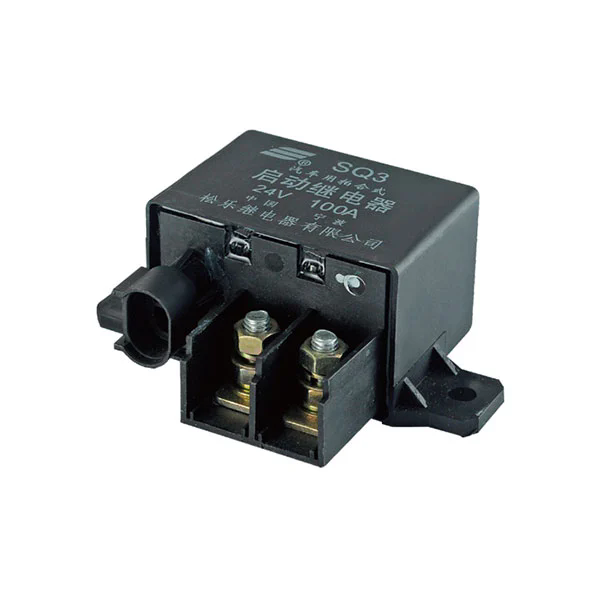
High current relays are specialized electromechanical or solid-state devices designed to switch and control circuits carrying high electrical currents. Unlike standard relays, they can handle currents ranging from tens to thousands of amperes without damage, making them critical for heavy-duty applications.
Companies like Songle produce high current relays that are reliable, durable, and optimized for various industrial and automotive applications.
The core principle of a high current relay involves using a small control signal to actuate a mechanism that switches a high current circuit. There are two main types:
Below is a simplified comparison table:
| Type | Operation | Durability | Switching Speed |
|---|---|---|---|
| Electromechanical | Magnetic actuation | Moderate | Slow (ms) |
| Solid-State | Electronic switching | High | Fast (µs) |
High current relays are widely used in sectors requiring safe control of large electrical currents:
The versatility of high current relays allows engineers to integrate them into complex systems safely and efficiently.
Using high current relays offers several key benefits:
Choosing the proper high current relay requires careful consideration of the following factors:
For high-quality options, Songle provides a range of products suitable for both industrial and automotive use. You can explore their high current relay offerings here.
Proper installation ensures safety and longevity:
Q1: Can a high current relay be used for AC and DC loads?
A1: Yes, but you must check the relay’s voltage and current ratings for both AC and DC applications.
Q2: How long does a high current relay typically last?
A2: Electromechanical relays usually last tens of thousands of cycles, while solid-state relays can last millions of cycles.
Q3: Can a solid-state high current relay overheat?
A3: Yes, especially if heat dissipation is inadequate. Heat sinks and proper ventilation are essential.
Discover high-quality high current relays designed to meet your toughest electrical demands with Songle. Contact us today to find the perfect solution for your application!