Abstract
Modern electrical equipment requires compact switching components capable of controlling demanding loads without compromising circuit safety or operational stability. An Ultra-miniature High-power Relay provides an effective combination of small dimensions, electromagnetic isolation, and high-load switching capability. These characteristics make compact power relays valuable in home appliances, automotive electronics, industrial controllers, and intelligent electrical systems. We explain their operating principles, contact configurations, electrical specifications, reliability requirements, and application considerations to help engineers select appropriate relay solutions.
Technical knowledge at your fingertips. Click a topic to explore the corresponding section.
What Makes Compact High-Power Relays Essential in Modern Electronics?
Electronic systems are becoming increasingly compact while their switching requirements continue to grow. Designers must integrate power control, monitoring, communication, and protection functions within restricted circuit-board dimensions.
A miniature electromagnetic power relay addresses this challenge by allowing a relatively low-power control circuit to operate a separate electrical load. The mechanical contacts provide galvanic separation between the coil circuit and the switched circuit.
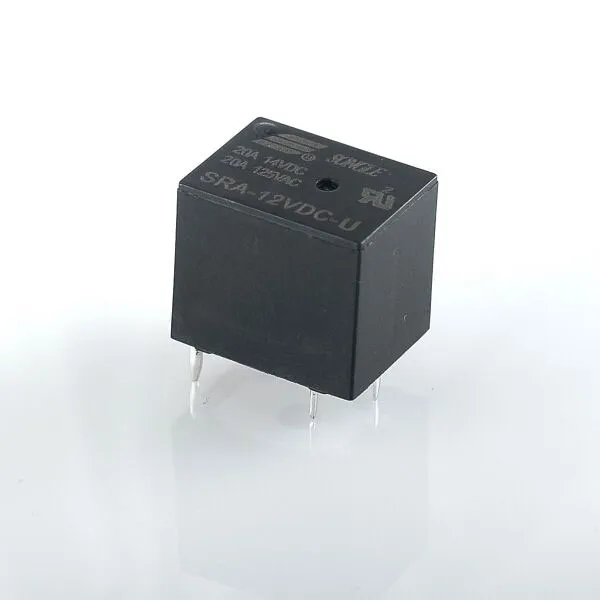
Understanding Miniaturization and Load Capacity
Relay miniaturization involves more than reducing enclosure dimensions. The internal electromagnetic structure, contact materials, terminal arrangement, and heat-dissipation characteristics must function together within a restricted volume.
At Songle, we focus on compact electromagnetic relay designs that support reliable power switching in space-sensitive electronic assemblies.
Our relay families are developed for applications requiring combinations of compact PCB layouts, defined electrical ratings, and dependable electromechanical operation.
How Does an Electromagnetic Power Relay Control Electrical Loads?
An electromagnetic relay uses magnetic force to change the state of electrical contacts. Its principal components include a coil, magnetic core, armature, spring mechanism, and conductive contacts.
When the rated control voltage energizes the coil, the resulting magnetic field attracts the armature. This mechanical movement opens or closes the contacts according to the relay configuration.
The Switching Sequence
- Control Signal Applied: The driving circuit supplies the specified coil voltage, creating an electromagnetic field within the relay.
- Armature Movement: Magnetic force attracts the armature, overcoming the restoring force of the spring.
- Contact State Changes: Normally open contacts close, while normally closed contacts open where the applicable contact arrangement provides them.
- Load Circuit Operates: The switched circuit conducts or interrupts current according to the contact state and external circuit arrangement.
- Coil De-energizes: The magnetic field collapses and the mechanical restoring force returns the contacts to their normal position.
Why Electrical Isolation Matters
The coil and contact circuits are electrically separated in an electromechanical relay. This architecture allows a low-voltage controller to command a circuit operating at another voltage.
However, practical insulation performance must be assessed using dielectric strength, insulation resistance, clearance, creepage distance, and relevant safety requirements.
Key Engineering Advantages of Miniaturized High-Load Switching
Our Ultra-miniature High-power Relay range addresses the practical need for compact construction and reliable electrical switching. Different relay models offer distinct combinations of coil specifications, contact arrangements, and switching capabilities.
Reduced component dimensions help designers arrange power-control functions on densely populated printed circuit boards.
Suitable contact structures allow selected relay models to control significant electrical loads within compact packages.
Electromechanical separation between the coil and contacts supports isolated control of external load circuits.
Different coil voltages, contact forms, and enclosure options help accommodate varied electrical designs.
Small Size Without Ignoring Thermal Behavior
High current flowing through contacts and terminals produces resistive heating. In compact equipment, limited airflow and nearby heat-generating components can increase operating temperatures.
Engineers must therefore consider PCB copper dimensions, terminal connections, enclosure ventilation, ambient temperature, and the duration of load operation.
A relay should always operate within the electrical and thermal conditions defined for its exact model.
04. Which Electrical Specifications Determine Relay Performance?
Selecting a power relay requires careful interpretation of its electrical specifications. A contact current rating alone cannot establish suitability for every switching application.
| Parameter | Technical Meaning | Selection Importance |
|---|---|---|
| Nominal Coil Voltage | Specified operating voltage for the electromagnetic coil | Must match the control circuit and driver design |
| Contact Rating | Permitted switching conditions for a defined electrical load | Must be evaluated with voltage, current, and load type |
| Contact Resistance | Electrical resistance through closed contacts | Influences conduction loss and heat generation |
| Dielectric Strength | Insulation withstand capability between specified circuits | Supports electrical isolation requirements |
| Operate and Release Time | Time required for mechanical state transitions | Influences switching sequence and control timing |
| Electrical Endurance | Expected operation count under defined electrical conditions | Helps assess suitability for repetitive switching |
| Operating Temperature | Permitted environmental temperature range | Must accommodate actual enclosure conditions |
Understanding Coil Voltage and Coil Power
The relay coil is responsible for creating the magnetic force needed to operate the contact mechanism. Its nominal voltage must correspond to the available supply.
Coil power influences energy consumption, driver requirements, and thermal behavior. Engineers should also confirm pickup voltage, release voltage, and permissible operating voltage under expected conditions.
Why Contact Ratings Require Careful Interpretation
A relay rated for a particular resistive current may not support the same current when switching motors, transformers, or strongly capacitive loads.
Inductive loads produce voltage transients during interruption, while capacitive loads may generate high inrush currents. Both conditions can accelerate contact wear.
How Do Different Compact Power Relay Series Compare?
We provide several compact electromagnetic relay series designed for different switching and installation requirements.
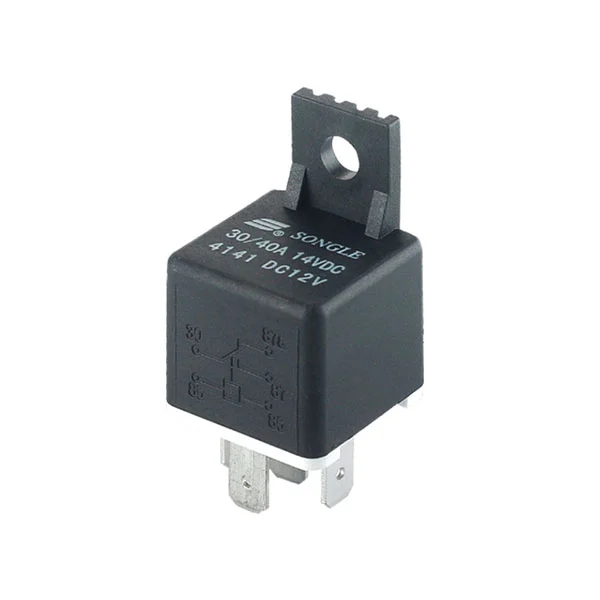
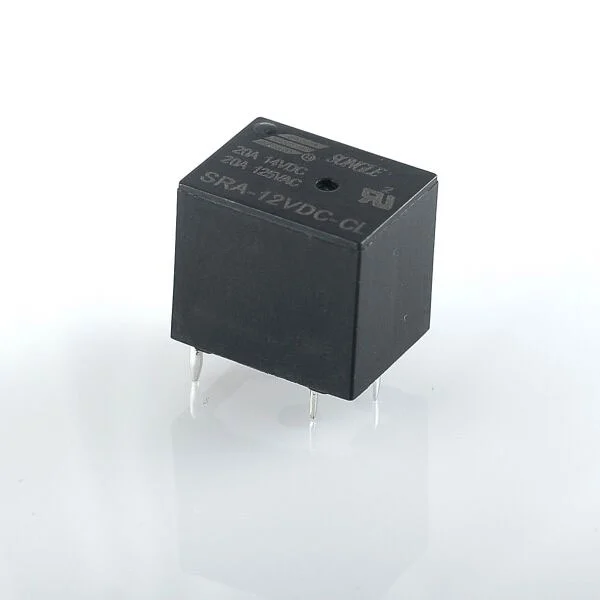
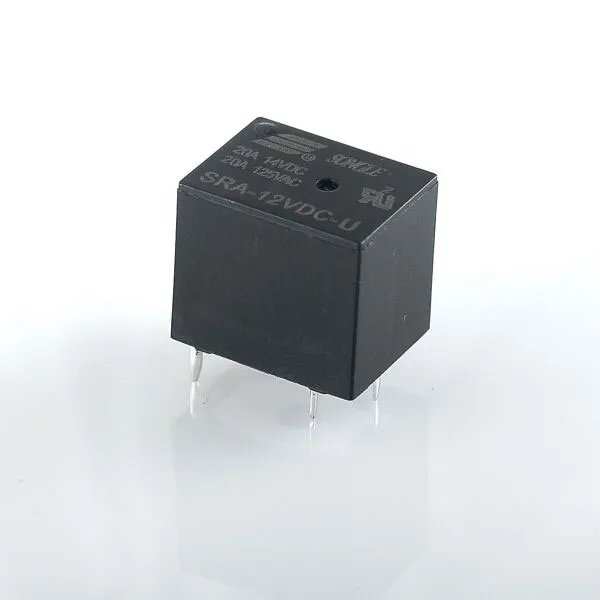
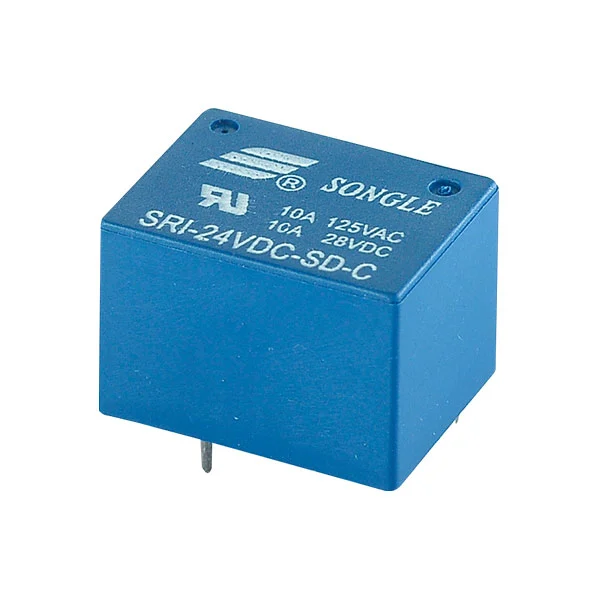
Our product range includes SRA(T74), SRA-U(T74-U), SRD(T73), SRU(22F), SRUH(22FH), and SRF(T76) models.
| Relay Series | Design Characteristics | Application Considerations |
|---|---|---|
| SRA(T74) | Compact electromagnetic power relay with high-current carrying capability | Automotive electronics, appliance controls, and industrial circuits |
| SRA-U(T74-U) | Compact design with dual normally open contact configuration | Applications requiring coordinated switching of two circuits |
| SRD(T73) | PCB-mounted relay family with multiple coil and contact-rating options | General equipment control and compact switching assemblies |
| SRU(22F) | Compact construction with selected high-load contact configurations | Appliances and industrial control equipment |
| SRUH(22FH) | Higher-current variants with different insulation options | Applications requiring enhanced switching and insulation capabilities |
| SRF(T76) | Miniaturized electromagnetic relay construction | Space-sensitive power-control applications |
Relay characteristics depend on the exact model, suffix, coil specification, and contact configuration. Verify the applicable product datasheet before finalizing electrical or mechanical design.
Why Model Variants Matter
Two relays belonging to the same product family may differ in coil voltage, contact arrangement, enclosure construction, or switching limitations.
Part-number verification is essential when replacing an existing relay or selecting components for automated PCB assembly.
Where Are Compact High-Power Relays Used?
The versatility of an Ultra-miniature High-power Relay makes this component category valuable in equipment requiring dependable switching within limited installation space.
Home Appliances and Smart Devices
Washing machines, air-conditioning equipment, household controllers, and intelligent appliances frequently require compact switching mechanisms.
Relays can control heating elements, pumps, valves, motors, and other electrical loads, provided the selected contacts are rated for their operating characteristics.
Automotive Electronic Systems
Automotive applications often combine restricted installation space with vibration, temperature variation, and demanding electrical conditions.
Compact relays may be used in auxiliary electrical controls, lighting circuits, and other vehicle-related switching systems. Automotive qualification and environmental suitability must be confirmed separately.
Industrial Automation
Industrial controllers use relays to interface electronic control signals with external equipment such as actuators, solenoid valves, alarms, and auxiliary power circuits.
Contact configuration, switching frequency, control voltage, and electrical endurance are particularly important in automated systems.
Communication and Power-Control Equipment
Communication infrastructure and electronic power-control assemblies often demand compact switching components with defined insulation characteristics.
Electromechanical relays can provide controlled circuit connection or disconnection while maintaining separation between control electronics and switched loads.
How Can Relay Reliability Be Improved in Demanding Environments?
Long-term relay performance depends on electrical loading, mechanical operation, environmental conditions, and correct circuit protection.
We encourage equipment designers to consider the complete operating environment rather than evaluating a relay solely by its nominal electrical rating.
Contact Wear and Electrical Arcing
Electrical arcs may occur when contacts open or close under load. Repeated arcing can cause contact erosion, surface deterioration, and increased contact resistance.
Appropriate load matching and protective circuits can help reduce electrical stress. Suppression arrangements must be selected according to AC or DC operation and the characteristics of the connected load.
Environmental Protection
Dust, moisture, soldering flux, and corrosive contaminants can affect certain relay constructions. Selected Songle relay variants offer enclosure or sealing options suited to particular assembly and environmental requirements.
The meaning of a sealed or flux-resistant construction must be confirmed for each model. Such features do not automatically establish waterproof performance or resistance to every chemical exposure.
Temperature and Installation Conditions
- Ambient Temperature: Confirm that actual operating conditions remain within the relay's specified range.
- PCB Layout: Provide suitable conductor dimensions and terminal connections for expected current.
- Electrical Protection: Evaluate appropriate protective devices and transient suppression where necessary.
- Mechanical Installation: Ensure correct terminal spacing, mounting orientation, and soldering conditions.
- Load Characteristics: Account for starting current, inrush, switching frequency, and duty cycle.
08. How Should Engineers Choose the Right Relay?
Choosing the appropriate Ultra-miniature High-power Relay requires balancing electrical performance, mechanical dimensions, environmental suitability, and control requirements.
Define the Electrical Load
Begin by identifying the operating voltage, steady-state current, expected inrush current, and type of load being switched.
Resistive, inductive, capacitive, and motor loads can place substantially different stresses on relay contacts.
Confirm the Control Circuit
The nominal coil voltage must match the control supply. The driver circuit must also provide sufficient current for reliable operation.
Where required, an appropriate flyback suppression device should be used with a DC relay coil. Its influence on release time must be considered.
Evaluate Mechanical Compatibility
Confirm the relay's external dimensions, PCB footprint, terminal arrangement, and mounting requirements.
Mechanical compatibility is particularly important when replacing an existing component in a mature electronic design.
Review Insulation and Safety Requirements
The required insulation performance depends on the application voltage, circuit arrangement, environmental conditions, and applicable product safety standards.
Safety approvals should be checked against the exact relay variant and its approved operating conditions.
Why Technical Communication Matters
We recommend sharing complete circuit requirements during relay selection. A detailed description of the application helps identify suitable relay families and prevents incorrect assumptions about contact capability.
Electrical drawings, installation constraints, and operating conditions can clarify critical design requirements.
Frequently Asked Questions
Explore practical answers to common relay engineering questions. Select any question to expand the explanation.
What is the difference between a miniature power relay and a signal relay?
Power relays are generally designed to switch higher electrical loads, while signal relays are optimized for lower-level control and signal circuits. Their contact materials, electrical ratings, and intended operating conditions may differ.
Can a compact power relay switch both AC and DC loads?
Some relay models provide specified ratings for both AC and DC switching. However, the permissible voltage and current may differ significantly. Always verify the exact load rating for the intended operating condition.
How does coil voltage affect relay operation?
Coil voltage determines the electromagnetic force available to operate the armature. Insufficient voltage can prevent reliable activation, while excessive voltage may cause overheating or coil damage. The supply must remain within the specified operating limits.
Why do relay contacts sometimes stick together?
Contact welding may occur when excessive current, inrush energy, or electrical arcing causes localized heating. Proper load selection and appropriate protective circuit design help reduce this risk.
What is the difference between electrical and mechanical endurance?
Mechanical endurance describes operation under specified conditions without the normal rated electrical switching load. Electrical endurance considers repeated switching under defined load conditions. The two ratings should not be treated as interchangeable.
Are sealed relays suitable for humid environments?
Certain sealed constructions offer improved protection against specified contaminants or assembly processes. Actual moisture resistance depends on the sealing design and applicable environmental rating. A sealed relay should not automatically be considered waterproof.
Can a relay be connected directly to a microcontroller output?
Most power relay coils require more drive current than a typical microcontroller output can provide. A suitable transistor, MOSFET, or relay driver circuit is generally needed, together with appropriate coil transient suppression.
How can engineers improve relay service life?
Reliable service life depends on selecting appropriate contact ratings, limiting excessive inrush and switching transients, maintaining suitable temperatures, and following installation requirements. Application-level testing is also important.
Advancing Compact Electrical Control Through Reliable Relay Technology
Modern power-control systems require switching components that integrate efficiently into compact electronics while maintaining dependable electrical and mechanical operation.
At Ningbo Songle Relay Co., Ltd. , we focus on electromagnetic relay technology for applications where reliable switching, compact dimensions, and product consistency are essential.
Our Ultra-miniature High-power Relay solutions support engineers designing compact electrical control assemblies, appliance systems, automotive electronics, and industrial switching circuits.
Successful relay integration requires careful coordination between component specifications and real operating conditions. Coil characteristics, contact ratings, insulation performance, and thermal management should all be evaluated together.
We help customers identify appropriate relay configurations by reviewing their electrical requirements, installation conditions, and intended applications.